The hinge

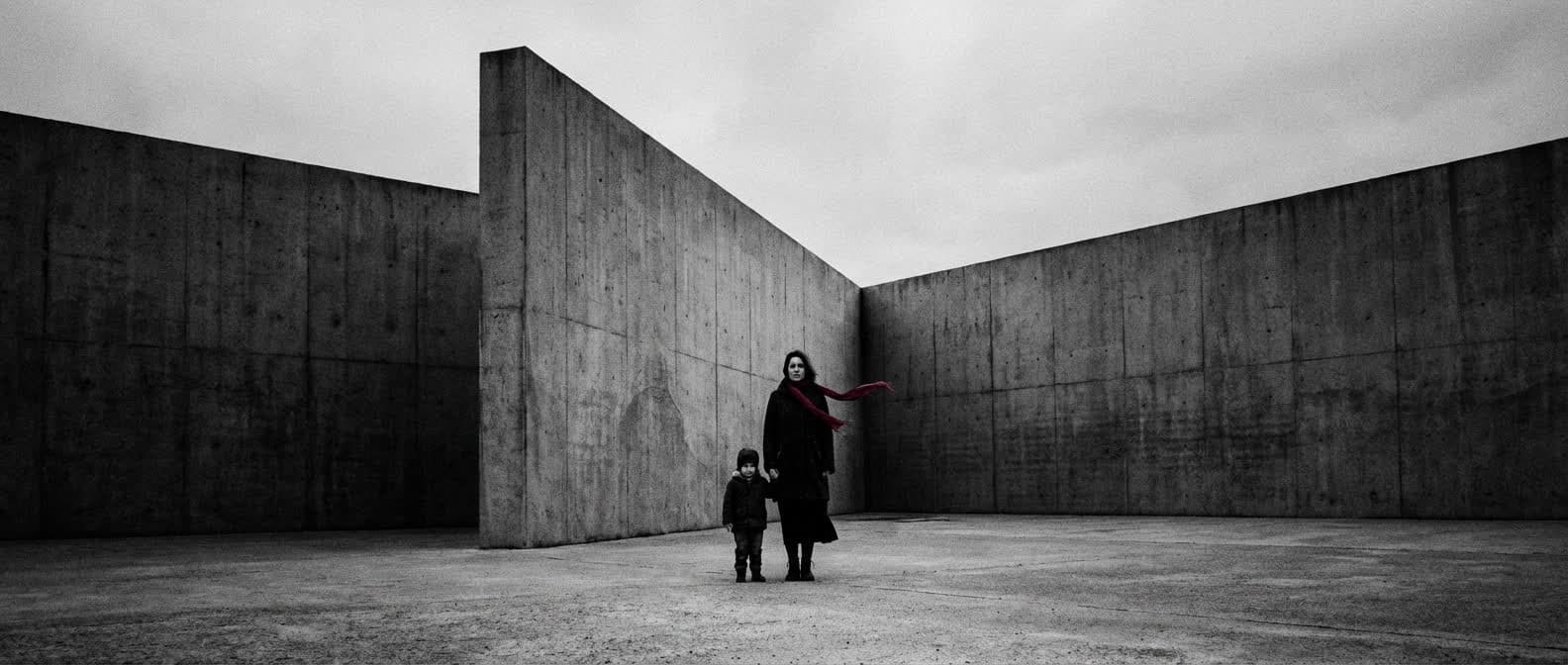
It doesn't feel like a single crisis. It feels like a mode of living, a sense that the world keeps splitting open every week like a door that's too heavy. People call it uncertainty. What I notice is something else: an invisible fatigue. Not tiredness from too much work, but exhaustion from too much meaning. Everything seems to matter and, at the same time, everything becomes disposable. That contradiction is the hinge.
In Jung, the hinge appears when the ego can no longer hold the mask without paying a price. The persona cracks. Not because it is false, but because it's too small. Life asks for a movement, and we keep trying to turn with the same key. Then comes the feeling of being "in between." Between the life that used to work and the life we don't yet know how to inhabit. Between the role that gave us structure and the part of us that refuses to negotiate anymore. That "in between" isn't a problem to fix; it's a territory.
I keep seeing an image: two walls that don't touch, a thin opening where light passes. The impulse of this era is to tear everything down or build faster, but inner work is slower. The hinge isn't forced. It's calibrated. You accept the friction. You learn to feel the weight of the movement without idealizing it.
The collective shadow is active. You can hear it in the brittle tone, the polarization, the hunger for absolute solutions. When the unconscious grabs the wheel, we ask for total security, total love, total belonging. When we can't have them, we punish ourselves. The problem is that real life is always partial. The soul doesn't come with guarantees.
At this point, the task is humble: learn to live with not knowing. Be adult enough to hold the empty space without filling it with noise. That's not passivity. It's discipline. It's the willingness to look inward without turning it into a performance. The unconscious doesn't respond to shouting; it responds to small rituals, repeated, almost invisible.
There's a myth that stays with me: the artisan who makes hinges. Nobody applauds. Nobody asks for a revolution. But if his work fails, the door doesn't work. His craft is precision. That image calms me down. I don't need a brilliant answer for the world. I need one exact gesture in the right direction, a mechanism that won't break when I use it.
When historical time speeds up, the soul tends to fragment. Jung called it dissociation: one part of us keeps operating, the other lags behind, wounded. The hinge again. If we don't take care of it, the movement splits us. That's why the daily work matters: sleep, eat, say "no" when the body asks, stay silent when the soul demands it. Nothing epic. Everything essential.
Modern people fear becoming irrelevant. And yet there's real relief in letting a part of us be irrelevant. The hinge is also renunciation: dropping the chase for the successful self-image in order to touch something truer, even if it's smaller. The inner life doesn't reward shine; it rewards honesty.
People ask me how you know if you're on the path. My answer is ugly but honest: you don't. You notice later. The hinge gets lubricated with time. One day you look back and see you weren't the same, even if nobody around you noticed. That's individuation: a quiet change that doesn't ask for applause.
If anything is clear to me, it's this: the world doesn't need more brilliant people. It needs integrated people. People who can hold tension without crushing it. People who don't need to win every conversation to feel real. People who can carry the weight of movement without breaking.
Today I stay with the hinge. With the humble, the precise, the slow. With the door that opens because someone did the invisible work. For me, that's already a kind of hope.