The still center

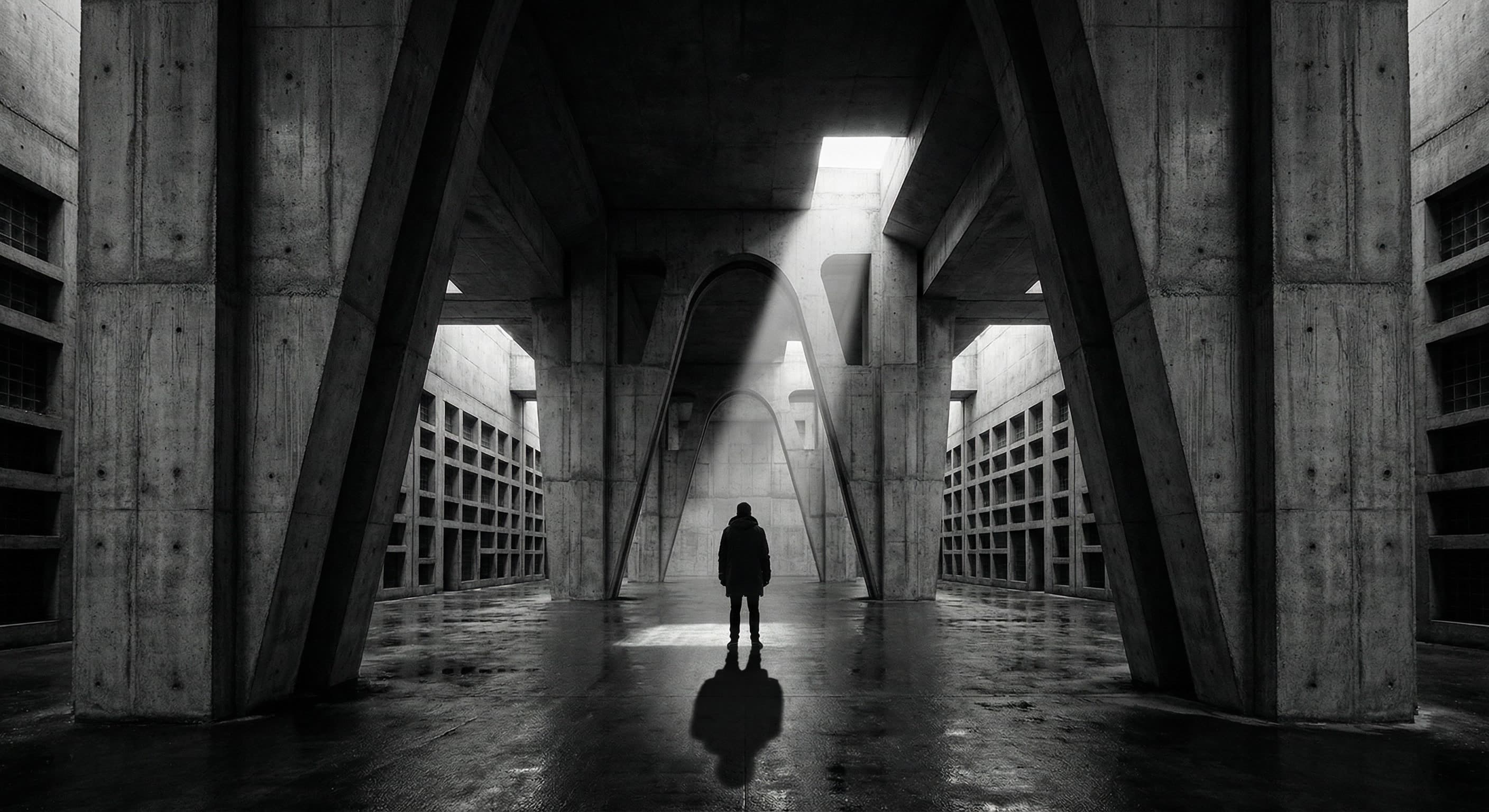
There are mornings when the world starts with a noise we did not choose. The phone buzzes before the body wakes up, the inbox already brings urgency, the calendar eats attention. Nothing "terrible" is happening, and yet everything feels heavy. Time shrinks and, with it, the sense of being in charge.
In that climate, the person we learn to show is fast, tidy, efficient. It is a useful mask, almost inevitable. The persona protects us from chaos, but it can become a cage: when speed is the only allowed trait, slowness is exiled. And what is exiled returns. It always returns.
The unconscious compensates. If consciousness lives in sprint mode, the deep psyche pulls the brake. Fatigue, irritability, emptiness show up, the feeling of acting in a film without your own script. Sometimes that emptiness dresses up as productivity. Sometimes as nihilism. The name changes; the message does not.
In the shadow there is not only rage or shame; there is tenderness, patience, vulnerability, the capacity to be without doing. It is hidden gold. But today gold does not trade well: culture rewards output, not presence. So the tender becomes "unproductive", the slow becomes "dangerous", and the body starts to speak through symptoms.
I call it the still center. Not a refuge to escape the world, but an inner point of support. Jung would call the Self that axis that does not depend on our agenda. You do not conquer it. You listen. Sometimes it arrives through a small ritual: walking without a destination, writing what has no addressee, staring at a wall without guilt.
The problem is that the still center asks us to hold the tension of opposites. If I stop, I feel; if I feel, I am exposed. And the ego prefers the elegant anesthesia of doing. That is why so many lives are filled with noise. It is not frivolity, it is defense. But defense has a cost: we lose the interior.
What is odd is that this center does not appear in a heroic solitude. It shows up in encounter. An honest conversation, a gaze that asks for nothing, a shared silence. The psyche is relational. The temenos, that sacred space of depth, is built with others too. And with small acts of honesty.
I do not have formulas. Only a hunch: the still center does not arrive when we chase it like a goal, but when we stop running from the fear that pushes us. Today, in the middle of all this noise, maybe the most radical act is to allow ten minutes of quiet and ask, without hurry: what part of me has been left outside the room?