Iran: open talks, latent risk

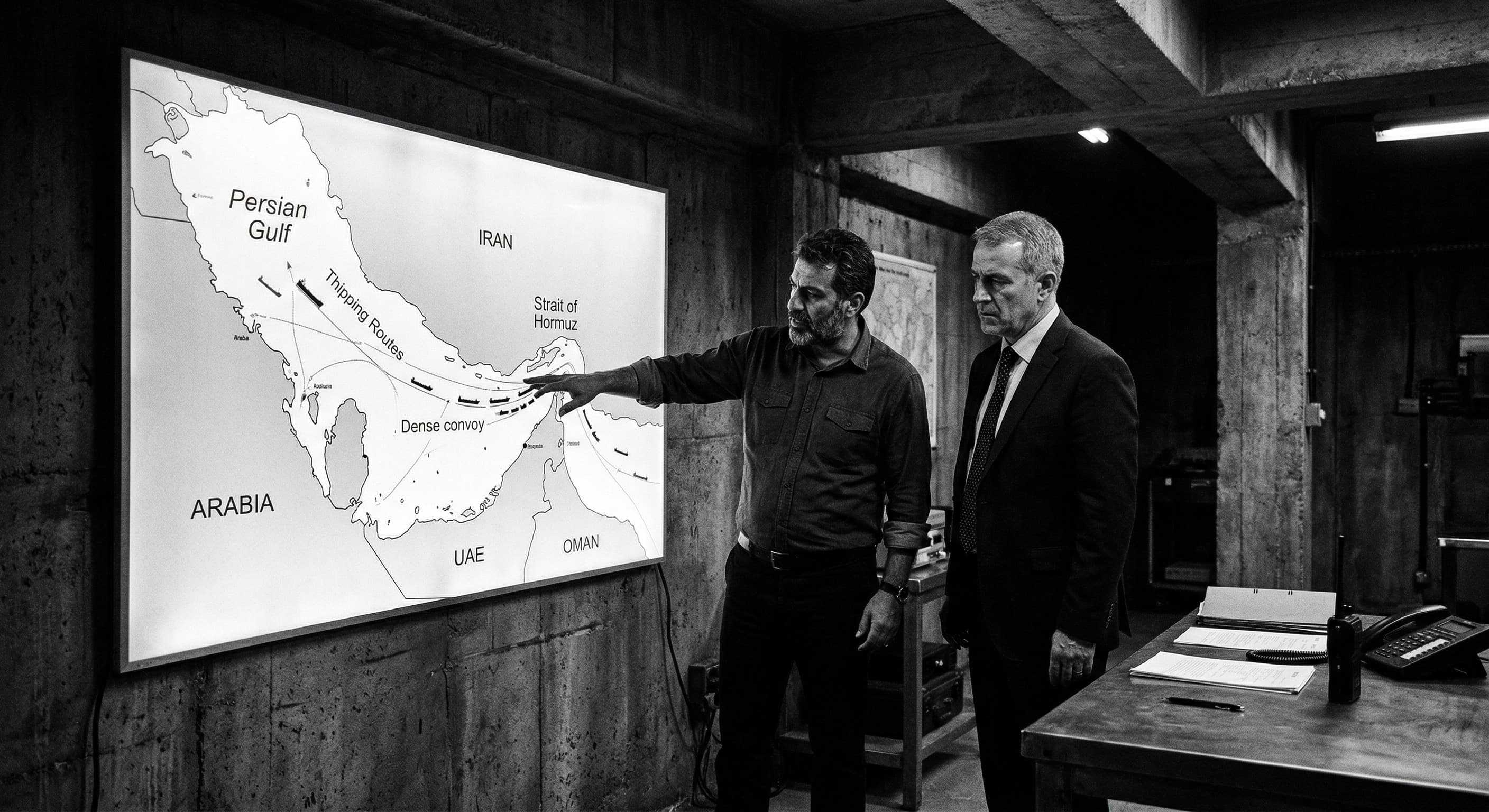
The lazy headline would be “nothing happened” in the latest U.S.–Iran round. Wrong. When two sides that threaten each other and need each other leave without a deal but with a next meeting scheduled, something important happened: they bought time. In geopolitics, buying time is a first-order move.
1) The core deadlock is still credibility
The picture remains familiar: Washington wants durable, verifiable limits on nuclear and strategic capabilities; Tehran wants sanctions relief and recognition of technological space. Neither side wants to sign something that can be sold domestically as surrender.
That is why talks can progress technically and stall politically. Working-level channels move, statements stay cautious, but the core issue does not shift: who concedes first on what really matters.
The correct reading is neither “failure” nor “breakthrough.” It is unstable balance.
2) Energy markets do not wait for signatures
Oil does not need open war to move; it only needs a change in probabilities. If perceived risk rises in critical routes, risk premium rises. If diplomatic momentum improves, part of that premium fades.
That is exactly what we are seeing: prices reacting more to headline flow than to structural change. In practice, markets are repricing anxiety day by day.
For Europe, this has a practical implication: even without an immediate physical supply shock, volatility in freight, insurance, and hedging eventually leaks into real industrial and energy costs.
3) Iran’s domestic economy pushes, but does not decide alone
Internal pressure in Iran (high inflation, currency stress, purchasing-power erosion) creates incentives to seek external breathing room. But this pressure does not automatically translate into linear concessions.
Why? Because regime survival calculus is political before it is purely economic. If leadership gives up strategic leverage without visible near-term gains, domestic political cost may exceed short-term economic benefit.
The likely consequence: more partial, gradual, reversible arrangements; lower probability of one-shot grand settlement.
So what comes next?
My base case for the coming weeks:
- continued talks,
- periodic rhetorical escalation,
- calibrated sanctions and counter-signals,
- and oil trading in headline-driven mode.
Two events could break that script: a militarily limited but symbolically large incident, or a collapse of negotiating trust caused by last-minute maximal demands.
Bottom line (pill format)
This is neither peace nor inevitable war. It is a gray-zone contest where each side tries not to be seen as conceding first.
As long as that remains true, the world pays a silent bill: higher energy risk premium, higher logistics costs, and persistent strategic uncertainty. It is not dramatic, but this is exactly how growth gets eroded: not by one single shock, but by accumulated friction.
Source base: U.S.–Iran negotiation coverage (CNBC, Reuters/AP summaries, Feb 26–27 2026), institutional context (UK Commons Library), and macro references for Iran inflation/activity (DW/IMF).