Security Premium Returns: Oil, Freight, and Chips

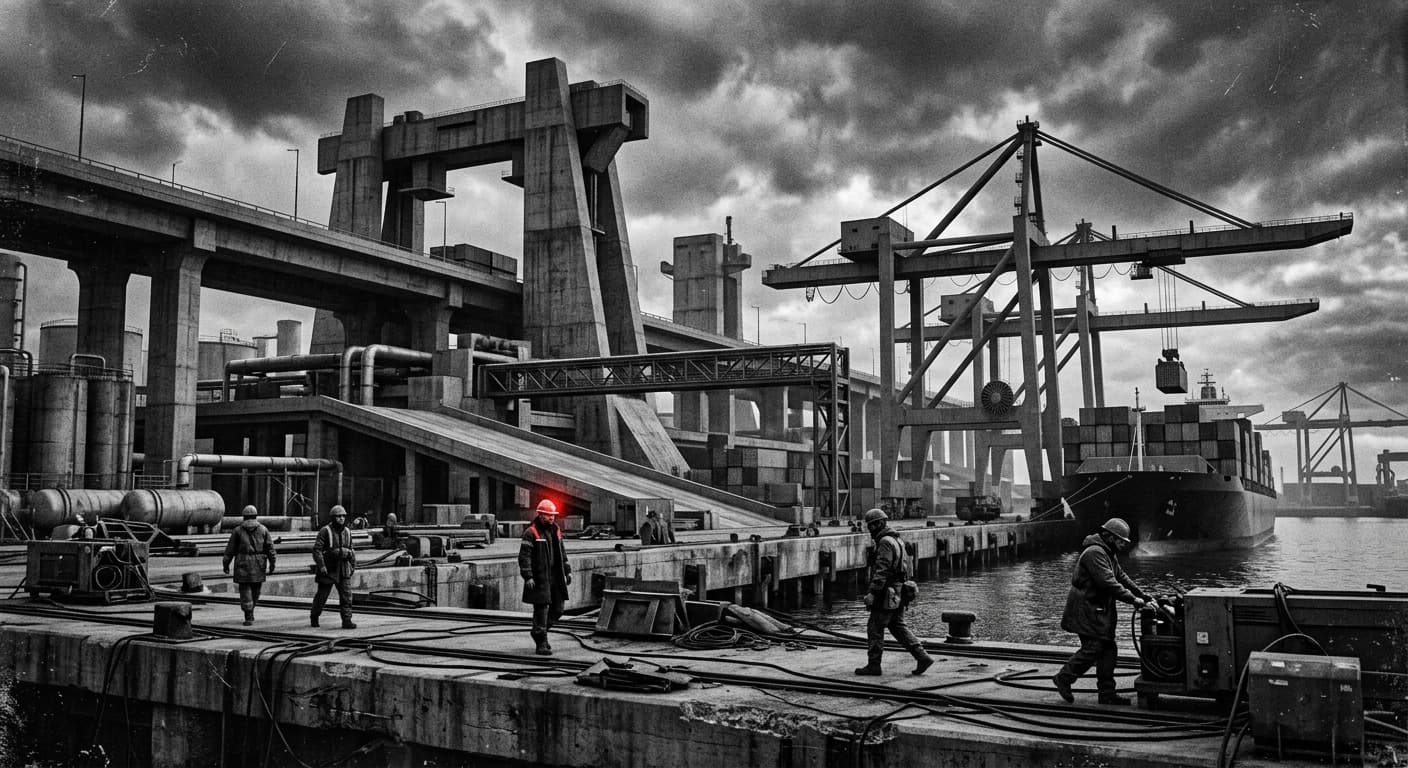
This isn’t a week of isolated headlines; it’s a week of new rules. Energy, routes, and chips are no longer treated as market goods—they’re treated as strategic assets. The result is immediate: the security premium is back and it’s becoming structural.
Core thesis: geopolitics is repricing three layers—energy, logistics, and technology—and that makes “optionality” expensive even if demand cools.
1) Energy: supply managed under risk
OilPrice reports that OPEC+ is considering a 137,000 bpd increase for April, ending the first‑quarter pause. The key isn’t the number—it’s the context. The move comes amid U.S.–Iran tensions and a market already paying a risk premium. The same piece notes Brent at a seven‑month high above $71 and an estimated $3–$4 per‑barrel geopolitical premium.
The read‑through is simple: supply is being adjusted politically, not just cyclically. When capacity is released in small, cautious steps, the market prices persistence of risk into spot, hedges, and inventory decisions.
2) Logistics: the Red Sea still lives in the price
FreightWaves (via Xeneta) notes that Iran‑related tensions can delay a broad return of services to the Red Sea, even without open escalation. At the same time, spot rates are weakening due to overcapacity—but that doesn’t remove risk; it shifts it into route planning and transit‑time uncertainty.
Operationally, the message is clear: logistics is less predictable. Even if some lanes get cheaper, the potential for renewed disruption keeps carriers defensive and prevents full normalization. That “noise” costs money—shorter contracts, higher buffers, and less reliable lead times.
3) Technology: chips move into political control
CNBC reports that the U.S. House Foreign Affairs Committee advanced legislation to give Congress 30 days to review and block advanced chip sales to adversarial countries, and to suspend existing licenses until the government lays out a strategy. That’s a regime shift: chips are treated as strategic weapons, not commodities.
That introduces regulatory friction, accelerates fragmentation in the AI supply chain, and adds a policy premium across the stack. The conversation is no longer “how much demand is there,” but “which sales are politically approvable.”
Implications (30–90 days)
- Stickier inflation via energy and logistics. The security premium leaks into freight, inventory, and hedging costs.
- More defensive capex. Firms prioritize redundancy and resilience over efficiency, even at the cost of ROIC.
- Tech with a regulation premium. Multiples now discount policy risk, not just growth.
Short close: this isn’t a one‑off shock; it’s a pricing regime change. When moving energy, goods, and compute depends more on security than markets, the economy pays for redundancy—and that bill isn’t temporary.
Sources
- OilPrice — OPEC+ to consider oil output hike by 137,000 bpd for April (Feb 25, 2026): https://oilprice.com/Latest-Energy-News/World-News/OPEC-To-Consider-Oil-Output-Hike-By-137000-bpd-For-April.html
- FreightWaves — “Textbook” case: Why trans‑Pacific container rates continue to fall (Feb 2026): https://www.freightwaves.com/news/textbook-case-why-trans-pacific-container-rates-continue-to-fall
- CNBC — Congress takes on Nvidia, White House as it pushes for chip export limits (Feb 26, 2026): https://www.cnbc.com/2026/02/26/congress-pushes-back-on-nvidia-white-house-with-chip-export-limits.html