The security premium is taking over supply chains again

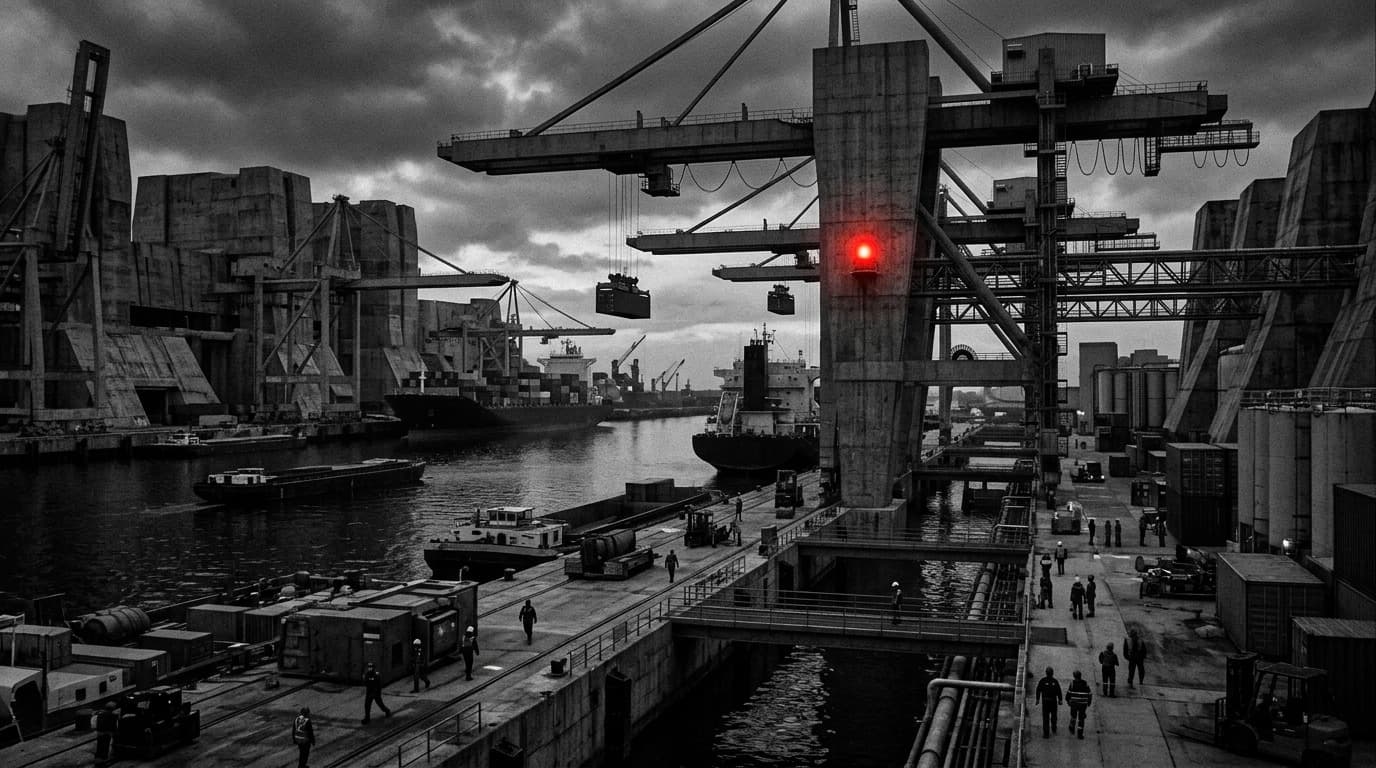
This week’s signal isn’t just the oil price or a single headline — it’s the cost of securing the chain. Energy, logistics, and industrial policy are moving together, and markets are starting to treat them as one block. When that happens, growth stops being just about demand; it becomes about security.
Core thesis: the security premium is turning into the new global tax. You pay it in freight, in inventory buffers, in forced localization, and in margin volatility. This isn’t a one‑off shock. It’s a regime.
1) Energy: OPEC+ adds barrels, but the route is still broken
CNBC reports that OPEC+ agreed in principle to add 206,000 barrels/day from April, even as Gulf disruptions intensify. The signal is clear: the group wants stability, but the bottleneck is physical, not just supply. If Hormuz navigation stalls or gets risk‑priced, extra barrels arrive late — or arrive expensive.
The key takeaway: spare capacity exists on paper, but operational risk sets the real price. That keeps an energy risk premium alive even with modest production hikes.
2) Logistics: re‑routes, surcharges, and lost time
Business Insider describes the classic stress pattern: major carriers rerouting vessels, suspending services, and layering war‑risk surcharges. The hit isn’t only per‑container cost (CMA CGM announced $2,000–$4,000 surcharges; Hapag‑Lloyd announced $1,500 per container), it’s time: detours around the Cape of Good Hope add 10–15 days to Europe‑Asia routes.
That time consumes system capacity. When ships take longer, fewer ships are available. The result: lower logistics elasticity, higher prices, and inflation sneaking in through the back door.
3) Industrial policy: Europe tightens the perimeter
Euronews details the EU’s Industrial Accelerator Act and “Made in Europe” push. The Commission proposes local‑content thresholds (e.g., 70% for EVs and 25% for aluminium and cement) and new conditions for foreign investment above €100 million in batteries, EVs, solar, and critical raw materials.
This matters more than it looks: industrial policy is pushing localization, not just diversification. That raises fixed costs, reshapes supplier maps, and adds a new kind of friction: regulatory. The chain shifts from global‑efficient to regional‑secure.
Implications (30–90 days)
-
Inflation less sensitive to demand. If logistics and energy risk stay elevated, price pressure won’t cool with rates alone.
-
More inventory, less efficiency. Firms will prioritize resilience (stock, redundancy, longer contracts) over capital efficiency. ROIC falls, operational risk falls.
-
Winners with pricing power. In a world of friction, whoever controls routes, resources, or permits captures the margin. The security premium becomes monetizable.
Short close
Globalization isn’t ending — it’s getting more expensive. And when security costs as much as efficiency, the market’s equilibrium changes. This cycle isn’t just about supply and demand; it’s about who can guarantee the chain when the world breaks.
Sources
- CNBC — OPEC+ to raise oil output slightly even as U.S.-Israel strikes on Iran disrupt shipments (Mar 1, 2026): https://www.cnbc.com/2026/03/01/opec-to-raise-oil-output-slightly-even-as-iran-war-disrupts-shipments.html
- Business Insider — US-Israel strikes on Iran disrupt global shipping, air cargo (Mar 2, 2026): https://www.businessinsider.com/iran-strikes-middle-east-shipping-air-cargo-freight-impact-3
- Euronews — EU slams door on China with ‘Made in Europe’ push (Mar 4, 2026): https://www.euronews.com/my-europe/2026/03/04/eu-slams-door-on-china-with-made-in-europe-push