Hormuz is no longer just oil: the gas shock hits Europe and Asia

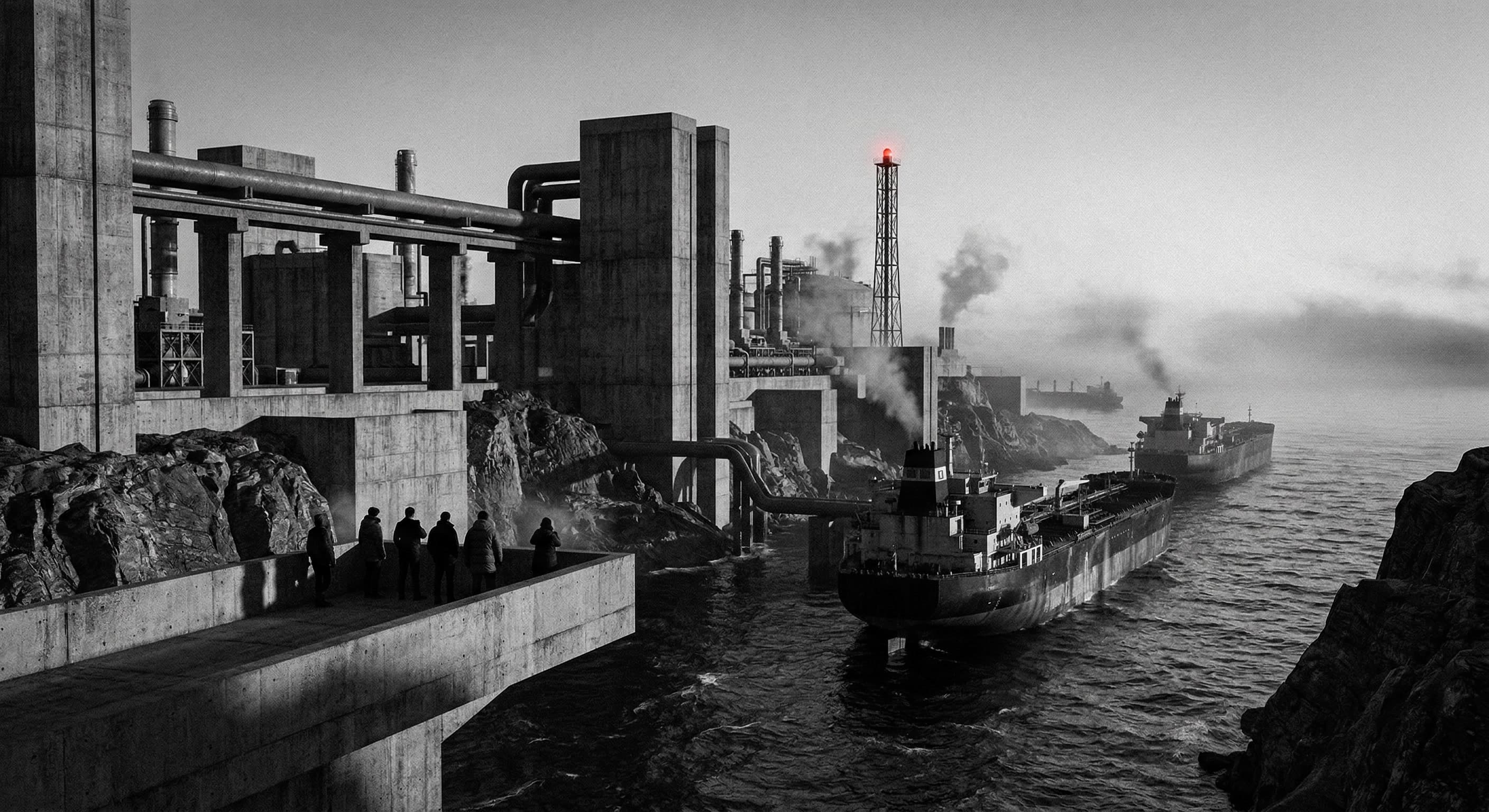
The headline is oil. The second‑order reality is gas. When LNG is squeezed, Europe and Asia feel it faster than the U.S. This is already macro: higher energy prices, softer growth, and central banks boxed in.
Thesis: the Hormuz shock is shifting from crude to a gas‑led squeeze that hits key importers and revives stagflation risk just as rate cuts were coming into view.
1) The real bottleneck is LNG
CNBC reports that ~20% of global LNG trade runs through Hormuz, and Qatar — one of the largest exporters — halted production after attacks. Goldman estimated the pause could cut ~19% of global LNG supply in the near term. The market reaction is immediate: TTF Europe +35% in a day (above 60 €/MWh) and ~+76% on the week, while Asia’s JKM benchmark hit a one‑year high. If LNG tightens, power prices and industry costs spike first.
2) Markets are pricing inflation, not just risk
The BBC notes Brent briefly around $82/bbl and European gas up as much as +50% intraday before settling near +39%. European equities slid (FTSE -1.2%, CAC -2.2%, DAX -2.6%), with banks leading losses on fears of fewer rate cuts ahead. Even with OPEC+ announcing a 206,000 bpd supply increase, the signal is clear: this is a logistics‑and‑security shock, not a spreadsheet capacity problem.
3) Exposure is asymmetric — Asia takes the hit
CNBC estimates ~13 million bpd transit Hormuz, roughly 31% of seaborne crude. On LNG, Gulf supply is critical: Pakistan is almost fully dependent, Bangladesh ~72%, India ~53%. China has some buffer (LNG inventories around 7.6 Mt) but would still have to compete for Atlantic cargoes if the disruption drags on. Translation: importers with less flexibility pay more, sooner.
Implications (30–90 days)
-
Stagflation risk rises in Europe and Asia. Expensive gas hits power prices and industry margins; inflation re‑enters through the LNG door.
-
Central banks lose room to pivot. Supply‑driven inflation lifts prices without lifting demand. Rate cuts get delayed, messaging tightens.
-
Corporate playbook shifts: longer contracts, more inventory. Rerouting, higher insurance, and competition for cargoes push firms to prioritize continuity over efficiency.
Close
Hormuz is no longer just the oil gauge — it’s the gas switch. And once LNG is disrupted, the shock travels straight into inflation and monetary policy. That trip has already begun.
Sources
- CNBC — Middle East war sends natural gas prices soaring, raising growth shock risk for Europe and Asia (Mar 3, 2026): https://www.cnbc.com/2026/03/03/middle-east-war-gas-energy-lng-drone-qatar-strait-hormuz-price-shock.html
- BBC — Oil and gas prices jump and shares fall as conflict escalates (Mar 3, 2026): https://www.bbc.com/news/articles/c75evve6l63o
- CNBC — The Strait of Hormuz is facing a blockade. These countries will be most impacted (Mar 3, 2026): https://www.cnbc.com/2026/03/03/strait-of-hormuz-closure-which-countries-will-be-hit-the-most.html