The stagflation trap: Hormuz, $120 oil, and a Fed with nowhere to go

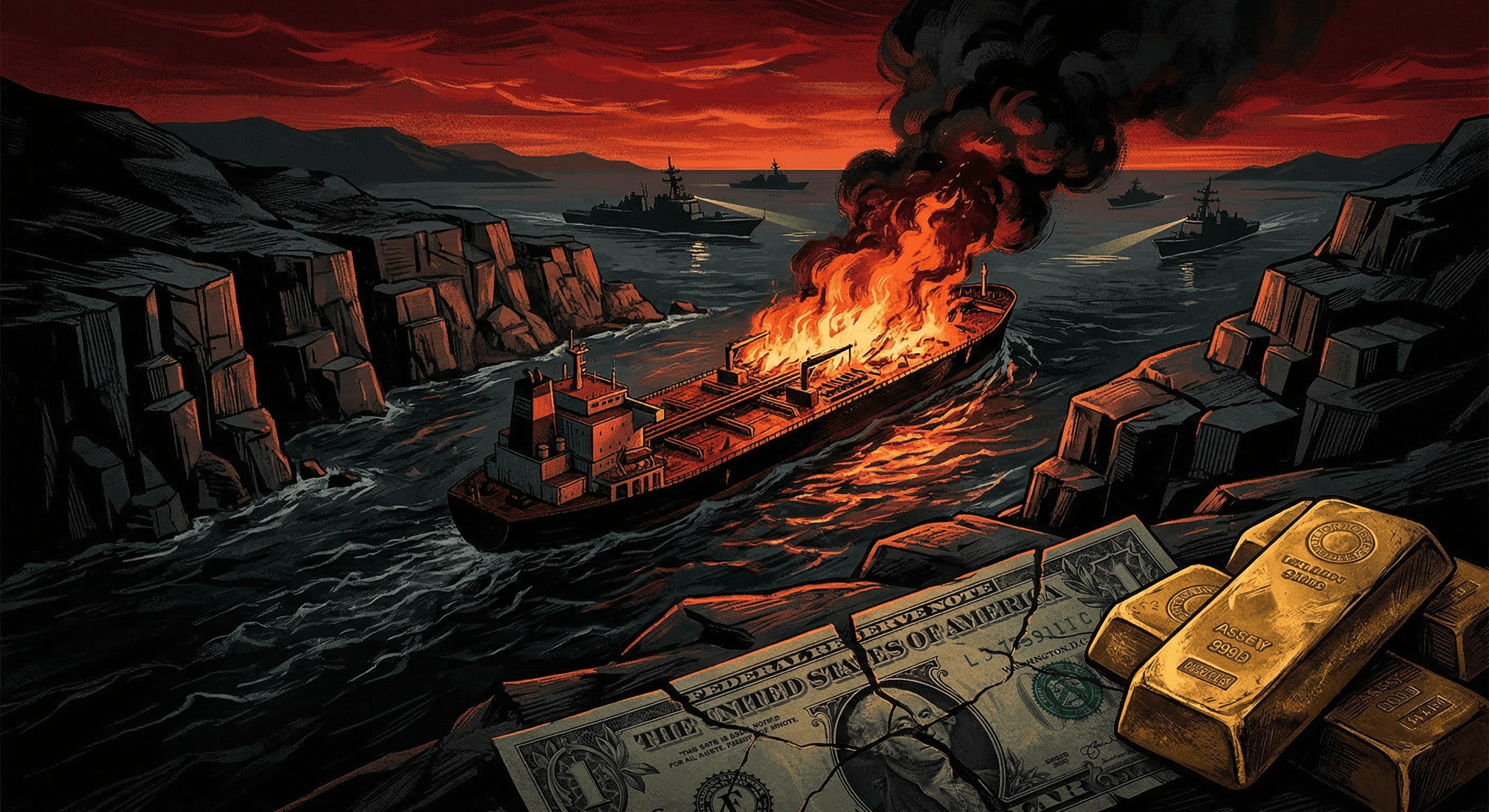
The Iran conflict just entered a new phase. On Saturday, Trump ordered strikes on Kharg Island — Iran's main oil export hub, where 90% of Iranian crude passes through. Meanwhile, US allies refused to send ships to escort the Strait of Hormuz. This week, the FOMC meets with the American economy already contracting. Three events, one conclusion: real stagflation has arrived.
Thesis: The Hormuz closure was a manageable energy shock. The escalation to Kharg Island, the absence of a coalition, and a Fed that can neither cut nor hike without making things worse turn this into a structural crisis with no clean exit.
1) Kharg Island: the escalation that changes everything
Last week the focus was Hormuz. Now Trump has struck Iran's export infrastructure directly. Kharg Island handles 90% of Iranian crude; attacks have targeted military assets so far, but Trump warned he could expand targets unless Iran reopens the Strait. Meanwhile:
- The Safaniya field (Saudi Arabia), the world's largest offshore oilfield, is shut down — it can't ship crude through the Strait.
- Analysts estimate 15 million barrels per day have already been pulled from global markets.
- Brent touched $126/barrel last week; serious damage to Kharg would push prices toward the $147 seen in 2008.
The issue is no longer just price — it's physical flow destruction. Strategic reserves cushion the blow but don't replace a closed corridor of indefinite duration.
2) The coalition collapses before it forms
Trump demanded that allies send warships to escort the Strait and force it open. The answer was a collective no: Germany, Japan, the UK, Australia, and China all declined. The Trump-Xi meeting, which could have opened a diplomatic off-ramp, was also cancelled.
The consequences are direct:
- Without multilateralism, the crisis drags on. The US and Israel can't manage Hormuz reopening alone without provoking further escalation.
- China sits at the center of the problem: it receives a third of its oil through Hormuz and has only a few months of reserves. Its refusal to join the coalition signals it prefers to pressure Washington from the sideline rather than act at the front.
- The diplomatic isolation of the operation raises the probability of a prolonged conflict, not a quick resolution.
3) The FOMC in a dead end
This week, five central banks make policy decisions. The FOMC leads. Holding rates (3.50–3.75%) is nearly certain — 92%+ market pricing. But the dot plot — how many cuts the Fed expects in 2026 — is a different story.
The context the Fed walks into is unmanageable:
- February: -92,000 jobs. The economy is contracting.
- Oil above $120 and 15% global tariffs (in effect since February 24). Imported inflation is rising.
- If the dot plot shifts from 1 to 0 cuts, markets will read it as accepted recession. If it keeps 2 cuts, the Fed looks like it's ignoring the energy shock.
The dollar and gold are rising simultaneously — a classic real stagflation signal: markets seeking refuge in both liquidity (dollar) and real assets (gold). Equities are in full defensive mode.
Implications (30–90 days)
-
Oil price is the new policy rate. While Hormuz stays closed, every central bank in the world is operating with an exogenous supply shock. They have no tools for this — only narrative management.
-
Asia facing a supply crisis. 84% of Hormuz-transiting crude was headed to Asian markets. China, Japan, and South Korea are enacting emergency cuts, consumption restrictions, and facing currency pressure.
-
Accident risk is rising. With Trump threatening more strikes "for fun" and no coalition setting escalation rules, one miscalculation could trigger a far larger crisis.
Close
The stagflation trap is no longer a scenario — it's the base case. Forced energy inflation, collapsing labor demand, and central banks out of room. What the Fed decides this week matters less than what Trump decides about Kharg Island. Markets know it. Crude knows it too.
Sources
- The Guardian — "Beyond the strait: why attacks on Kharg Island could keep oil prices high" (Mar 15, 2026): https://www.theguardian.com/business/2026/mar/15/middle-east-oilfield-shutdowns-prices-high-iran-war-strait-of-hormuz
- Wikipedia — "2026 Strait of Hormuz crisis": https://en.wikipedia.org/wiki/2026_Strait_of_Hormuz_crisis
- The Federal — "Iran war LIVE: Dubai airport shut after drone attack; countries snub Trump's Hormuz demand" (Mar 16, 2026): https://thefederal.com/category/international/top-news-today-march-16-latest-iran-updates-234391
- Complete Intelligence — "Weekly Outlook: March 16, 2026": https://completeintel.com/weekly-outlook-march-16-2026
- The Rio Times — "Key Market Events for the Week of March 16–20, 2026": https://www.riotimesonline.com/key-market-events-for-the-week-of-march-1620-2026/
- S&P Global — "Week Ahead Economic Preview: Week of 16 March 2026": https://www.spglobal.com/marketintelligence/en/mi/research-analysis/week-ahead-economic-preview-week-of-16-march-2026.html