Five Days for Someone to Blink: Trump Pauses, Iran Denies, Markets Bet

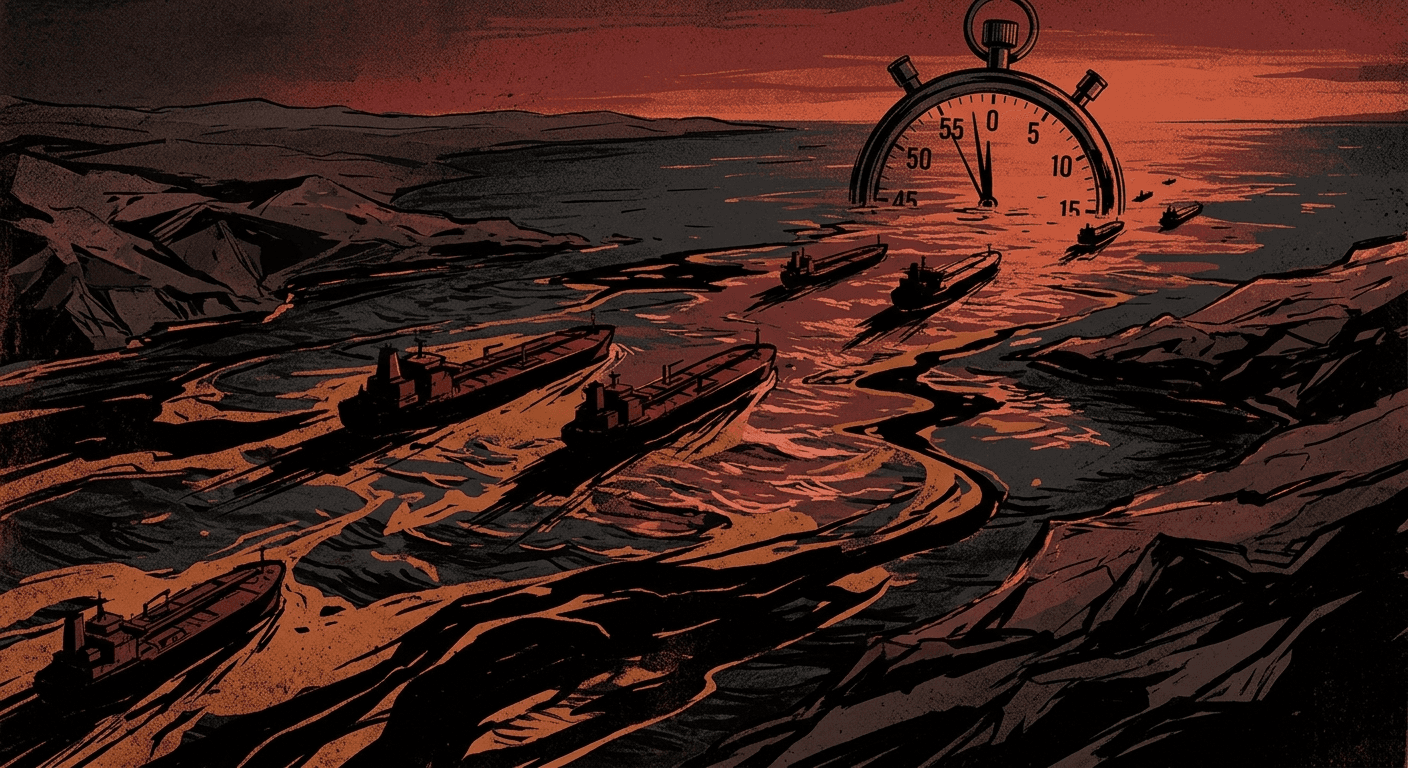
On Monday, Brent crude fell nearly 11% in a single session. WTI dropped from $100 to $88. The trigger: Trump posted on Truth Social that talks with Iran had been "very good and productive" and he was ordering a five-day pause on strikes against Iranian energy infrastructure.
Tehran's response came within hours: "There is no dialogue between Iran and Washington."
Two incompatible versions of reality. Markets have bet on Trump's. They have five days to be right.
Thesis: Markets are pricing a deal no one has confirmed — and the five days expiring March 28 represent the highest-risk window of this entire war.
1. Trump's Gambit: Unilateral Pause Under Self-Imposed Pressure
Context matters. On Saturday, Trump had threatened to "obliterate" Iran's power plants if the Strait of Hormuz wasn't reopened within 48 hours. On Monday, hours before that deadline expired, he changed tone.
This pause is not a deal. It's a unilateral bet: Trump announces negotiations exist, markets celebrate, oil falls, and pressure on Iran rises — without the U.S. firing another missile.
Classic negotiating tactic: move the other piece without sacrificing your own. But if Iran doesn't move anything, Trump faces a credibility dilemma on March 28 — attack or lose the initiative.
2. Hormuz Still at 5% — The Damage Is Already Structural
Brent below $100 is a correction, not a normalization. The strait is still operating at roughly 5% of normal capacity. Marine insurance markets remain closed for large tankers. Alternative freight costs via the Cape of Good Hope route have risen 340% since the conflict began.
Goldman Sachs is direct: if Hormuz flows stay at 5% for ten weeks, Brent will exceed its 2008 all-time high of $147 per barrel. Counting from the strait closure on March 4, that window closes in early May. Not a distant horizon.
The IEA called the situation "the most severe energy security challenge in history." That's not rhetoric: Hormuz handles roughly 20% of global oil supply and critical LNG volumes, including Qatar's — whose Ras Laffan hub was struck by Iranian missiles on March 19.
3. Markets Voted Before Knowing the Result
An ~11% single-session drop is the largest since the conflict began. The problem is it prices a scenario that has not been confirmed.
Goldman's forecast of $110 Brent for March-April assumes Hormuz stays at 5%. If flows recover, oil falls further. If the pause fails and the situation escalates, we're back above $112 quickly. Implied volatility hasn't compressed — it's just shifted.
The S&P 500 is down 4.55% since the war began. European gas prices have doubled. The Fed, ECB, and Bank of England have all warned of material inflation and growth impacts. None of those indicators bounced meaningfully on Monday's news.
Implications
For oil: the operational range this week is $88–105. Everything hinges on whether Iran makes any gesture toward Hormuz before March 28. No movement means the pause expires and escalation becomes the base case again.
For markets: "risk relief" built on unilateral declarations is fragile. Bond markets aren't celebrating. The inflation curve hasn't moved.
For geopolitics: if the pause fails, Trump must choose between striking Iranian power plants — with full escalation risk — or visibly backing down. The political cost of the latter is high. The former opens a scenario no market model has properly calibrated.
Close
Five days. By March 28, we'll know whether this was the start of a negotiated exit or the prologue to the final escalation. Until then, markets are betting — literally — that Trump is right and Tehran is lying. That's a bet with logic behind it. But one with significant downside if it's wrong.