Energy and Chips Under Lock and Key

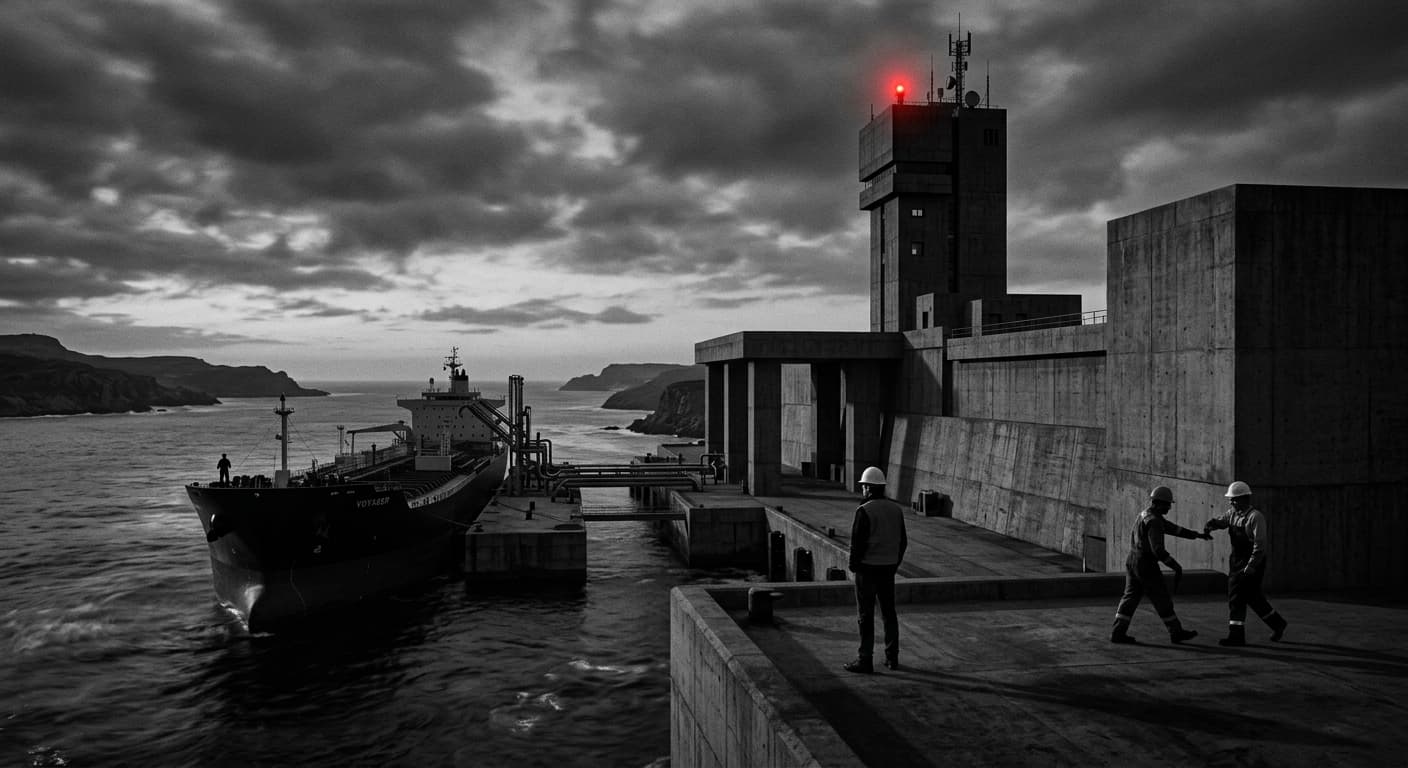
Geopolitics no longer negotiates only prices. It negotiates permissions. In energy, the insurance policy rules; in chips, location rules. When access becomes political, markets lose their “natural” price.
Thesis: we’re entering a control economy. Oil is being repriced by insured risk, and advanced chips are being restricted by geolocation checks. Two critical flows—energy and compute—are shifting from commodities to guarded infrastructure.
1) Energy is repriced by risk, not just supply
The EIA Short‑Term Energy Outlook notes a sharp price jump after Middle East escalation: Brent reached $94 on March 9 (about +50% YTD). The EIA assumes reduced transit through Hormuz keeps prices elevated, with Brent above $95 for the next couple of months before easing later. The outlook also flags that LNG disruptions through Hormuz are lifting gas prices in Europe and Asia, even if the U.S. is less exposed. Translation: the shock is now the baseline, not the tail risk.
2) Insurance decides whether ships move
Euronews reports war‑risk insurance for Hormuz has jumped from 0.15–0.25% of hull value to 5–10%. For a ~$100M VLCC, that’s millions per voyage. Some operators are coordinating passage with Iranian authorities, and others are waiting for clearance. Operational reality: if the policy is too expensive and safety is uncertain, the flow slows even when demand exists. The bottleneck isn’t crude—it’s the decision to enter.
3) For chips, the border is now digital
In Washington, the House Foreign Affairs Committee advanced the Chip Security Act, according to an ANI/Tribune India report citing the Select Committee on the CCP. The bill introduces location verification to prevent diversion of advanced AI chips and imposes reporting requirements to Commerce, plus further safeguards studies. The same release references recent DOJ cases over chip smuggling. Signal received: critical hardware is being managed as national security, not normal trade.
Implications
Stickier inflation: when marginal cost is insurance and risk, shocks last longer. “More supply” isn’t enough if transit is expensive or uncertain.
Tech fragmentation: location verification turns compute into a border‑aware asset. Compliance costs rise and deployments outside the “friendly perimeter” slow down.
Capex shifts to resilience: more spending on inventories, alternate routes, insurance, energy storage, and domestic compute capacity. Efficiency yields to redundancy.
Close
The global economy is being reorganized around controls, not just prices. Energy and chips—the physical and digital fuel—are now under lock and key. When that happens, the security premium stops being exceptional and becomes the new normal.