The energy shock just turned into domestic politics

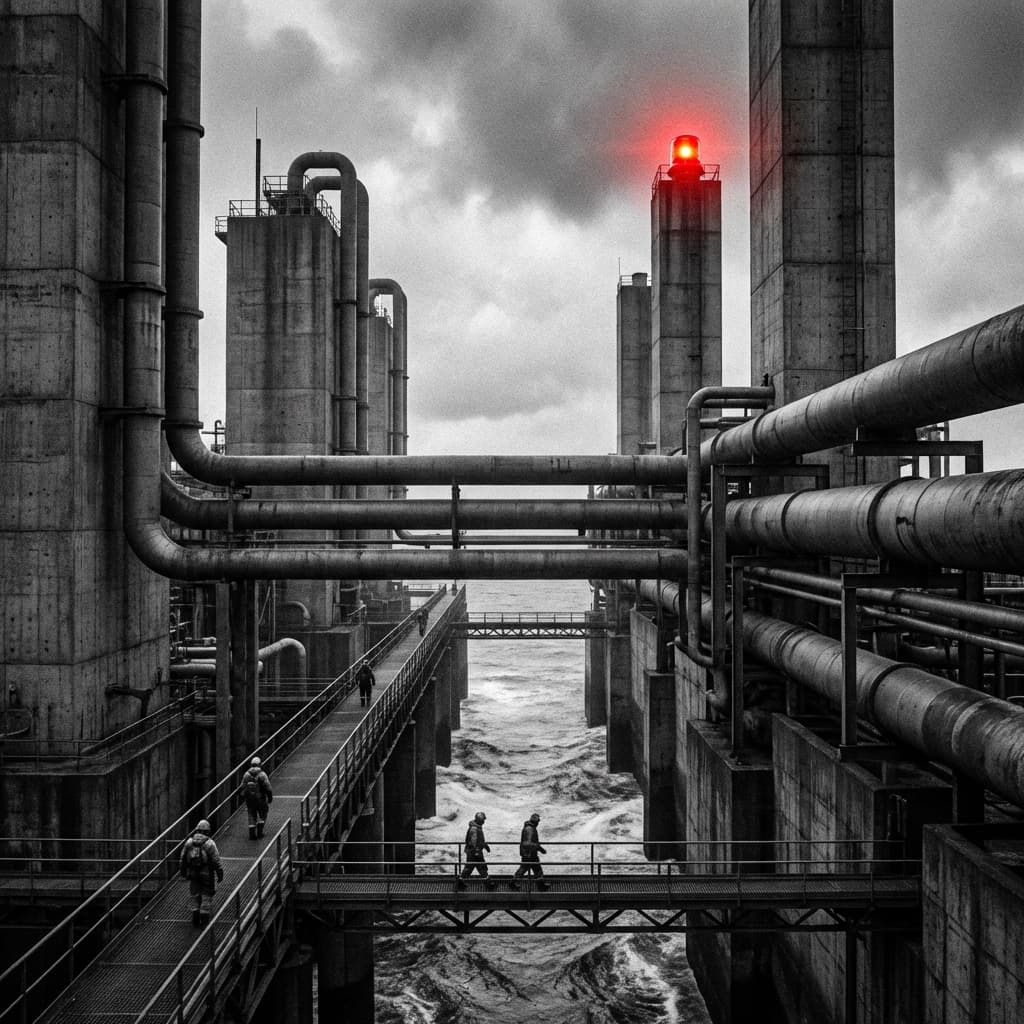
Some crises can be managed with reserves. Others force governments to change how millions of people behave. Energy just crossed that line.
Thesis: the supply shock no longer gets solved with barrels alone. It’s moving into domestic policy and the price of social stability. That changes the macro regime and the risk map.
1. Hormuz stops being a scare — it becomes the real choke point
The International Energy Agency says the Middle East conflict has triggered the largest supply disruption in oil market history, with shipping through the Strait of Hormuz reduced to a trickle. The IEA notes the strait normally carries around 20% of global oil consumption (roughly 20 million barrels per day). The disruption has already pushed crude above $100 and tightened diesel, jet fuel, and LPG.
This isn’t a local shock. It’s a global artery. When it compresses, everyone imports energy inflation.
2. Barrels aren’t enough — emergency logic kicks in
The IEA announced a 400 million barrel coordinated release from strategic stocks, the largest in its history. It’s massive, but it’s also a signal: the shock is too big for the supply side to absorb on its own.
The implicit message is stark: even with the biggest reserve release ever, stability depends on cutting demand, not just adding supply.
3. Demand moves into public policy
The IEA’s new report is not a technical paper; it’s an emergency playbook. It calls for concrete measures: remote work, lower speed limits, public transport prioritization, fewer flights, and shifting LPG away from transport toward essential uses.
These are no longer “green” ideas — they’re scarcity management. And once the state steps in, price stops being a pure signal and becomes a political instrument.
Implications
1) Stickier inflation, even if volatility fades. If adjustment comes through rationing rather than supply recovery, the price level stays high even after the spike.
2) Social risk becomes a macro variable. What used to be a technical input (barrels) becomes a domestic argument (who pays, who cuts, who gets support).
3) Energy and security fuse. Energy policy stops being just “transition” and becomes national security, with recurring emergency measures.
Close
The world just accepted a hard truth: when the choke point is geopolitical, public policy ends up managing demand. That’s not a patch — it’s a regime shift. And in that regime, risk isn’t only dollars per barrel; it’s political stability per week.