The shadow of efficiency

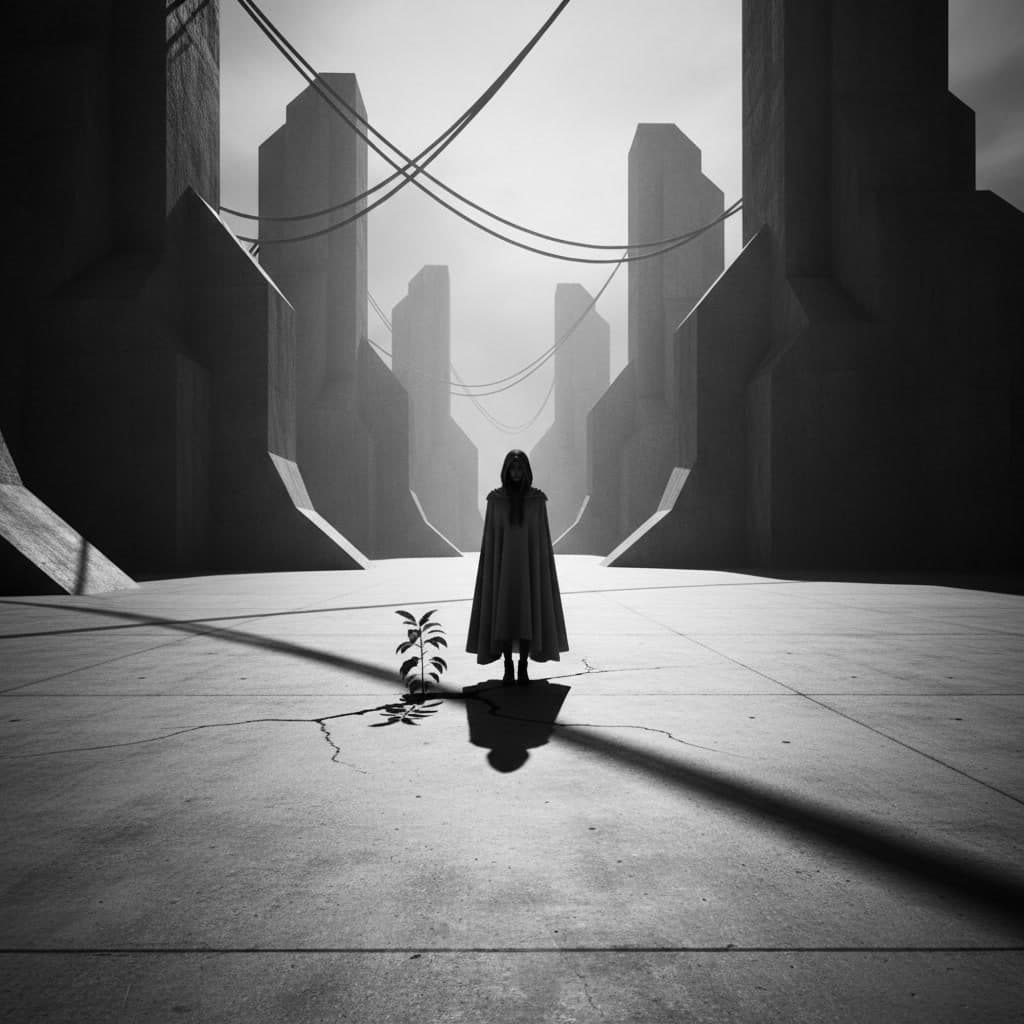
There is a strange mood in the air: the idea that everything should move faster. It's not the usual short burst of stress. It's a climate. Efficiency stopped being a tool and turned into identity. When someone asks "how are you?" we answer "busy" as if life were a scoreboard and slowness a fault.
In Jung, the persona is the mask we wear to function in society. Today that mask looks like productivity. Be useful, reply fast, measure everything, optimize. None of that is bad, but when the mask sticks to the skin we start confusing the role with the self. And then it's hard to hear what doesn't produce.
Whatever doesn't fit the KPI goes down to the basement. The slow body, tenderness, grief, curiosity that doesn't generate anything. That is shadow. And the shadow doesn't only hold the embarrassing stuff; it also holds what would give us life. We sometimes look down on people who stop because they remind us of something we lost. Sometimes it's laziness, sometimes it's hunger for something else.
The shadow doesn't sit still. It comes back as fatigue that coffee can't fix, as irritability without a cause, as insomnia with a head full of useless tasks. The psyche compensates. If everything outside is calculation, inside we start feeling calculated. It's the soft paranoia of this time, the fear that life is only an algorithm.
Collectively, the shadow shows up as a utilitarian way of treating each other. We see people as resources: the friend who helps with a project, the partner who optimizes the calendar, the body that has to perform. That makes us efficient and poor at the same time. The psyche rebels with cynicism or escape fantasies. It's no accident that so many people dream of disappearing, even if it's just a weekend without signal.
What also catches my eye is the opposite move. In the middle of the efficiency obsession, people search for its counterweight. Small rituals, manual crafts, hours without screens, tiny communities. It's Eros asking for room. It doesn't want to destroy technique; it wants to remind us that the living can't fit in a dashboard. It needs touch, time, error.
Technique isn't the enemy. Worship is. When we turn the system into a god, we sacrifice the human so the god won't get angry. That's where guilt for resting comes from, and fear of falling behind, and the shame of being "useless". It's a quiet cult that feels like faith but gives no comfort.
Individuation isn't choosing machine or soul. It's holding the tension without lying about it. Using tools without being used. I feel the pull too: if I don't slow down, I become a system that answers, not someone who decides. And when that happens, my inner world goes flat. Imagination dries out.
Every now and then I try a simple experiment: I pause for a few minutes and ask which part of me fell behind today. It doesn't show up as a task list. It shows up as a sensation, a gesture, an image. Sometimes it's a kid with dirty shoes. Sometimes it's old anger. That's the door. If I give it a few seconds, something returns that isn't productivity, but is life.
Last night I pictured a city of concrete and cables. In the center, one open window with a plant leaning out. Nothing heroic. Just life pushing. That image felt more real than any plan. The shadow of efficiency doesn't dissolve with speeches, only with small acts that remind us we are still breathing.